

Important: This material is for general information only and does not constitute investment advice. Trading commodities and CFDs involves significant risk of loss.
The festive season is here, and so is one of Wall Street’s most watched market phenomena, the Santa Claus Rally.
But this year, that holiday cheer might hit a roadblock. With the Federal Reserve’s critical rate decision on December 11, traders are asking one question:
Will the Fed give the green light for a Santa Claus Rally, or shut it down?
Before we dive into how the Fed could make or break December’s gains, let’s break down what this rally is and why it has such a powerful track record.
What Is the Santa Claus Rally?
The Santa Claus Rally refers to a historically bullish period in the stock market that takes place during the final trading week of December and the first two days of January.
It’s one of Wall Street’s most famous seasonal trends, rooted in a mix of improved sentiment, lower tax-loss selling, holiday optimism, and thinner trading volumes.
Why does it happen?
Market analysts typically point to a mix of factors:
- Holiday optimism and lighter trading volumes
- Portfolio rebalancing before year-end
- Fund managers improving how their portfolios look for year-end reporting.
- Investor expectations of a fresh start in the new year
Even though the reasons are debated, the performance data is hard to ignore.
Historical Performance: December Is One of the Market’s Strongest Months
1. December has delivered an average return of +1.3% since 1927.
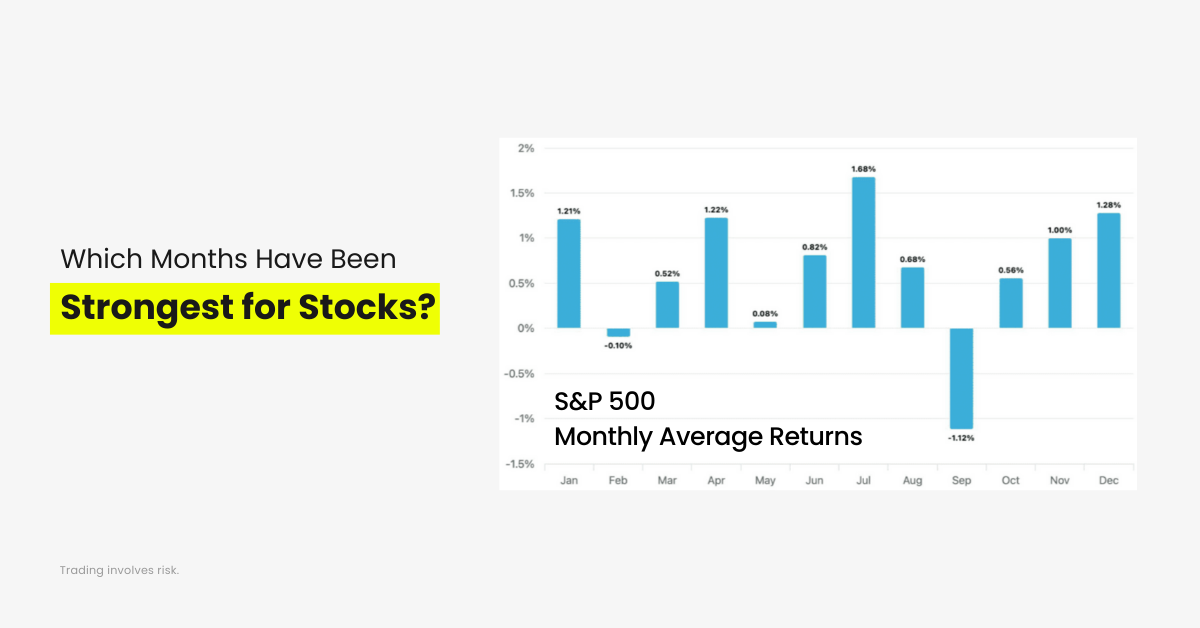
This makes it one of the strongest months of the year, outperforming most others, especially September (the weakest).
2. 72.5% of all Decembers since 1927 have ended positive.

This is the highest win rate of any month, with nearly three out of four (72.45%) Decembers closing green.
This is why traders love the phrase:
“When Santa comes to Wall Street, stocks tend to rise.”
But this year, Santa might be forced to wait.
Why the Santa Claus Rally Is at Risk in 2025
Historically, seasonality does a great job lifting markets into year-end, as long as nothing big gets in the way.
Unfortunately, something big is in the way this year:
The Federal Reserve’s interest rate decision on December 10.
The market is not just watching, it’s holding its breath.
Why the Fed matters this time:
1. Rate cuts vs. rate pauses: The entire market tone depends on this.
If the Fed signals rate cuts in early 2026, risk assets could explode higher, confirming a Santa Claus Rally.
If the Fed stays hawkish, warns about inflation, or hints at no cuts, the rally risks turning into a year-end slump.
2. Investors want certainty after a volatile year.
Stocks have climbed, but not confidently. A “go” signal from the Fed could unlock cash sitting on the sidelines.
3. Bond yields control the stock market.
Lower yields lead to higher stock prices.
Higher yields lead to pressure on tech, risk assets, and consumer sentiment.
The Fed’s messaging will directly determine where yields go next.
What the Market Needs From the Fed to Trigger a Santa Claus Rally
For December optimism to turn into actual price movement, investors need:
1. A dovish tone
No need for immediate cuts, just confirmation that the hiking cycle is done.
2. Lower inflation concerns
If the Fed believes inflation is cooling sustainably, risk assets will breathe.
3. Clear economic guidance
Investors hate uncertainty. A confident outlook translates to bullish flows into equities.
4. No surprise tightening
If the Fed hints at future hikes? Santa goes home early.
What Happens If the Fed Delivers a Green Light?
If the Fed sends a supportive or even mildly dovish signal, markets may respond with improved sentiment. In such scenarios, equity sectors like technology and consumer discretionary often show stronger performance, and major indices such as the S&P 500 and Nasdaq may experience upward momentum.
A softer outlook from the Fed can also coincide with a weaker US dollar, which may benefit assets including gold and risky assets. Market volatility may ease as uncertainty declines. Overall, these conditions have historically aligned with periods in which a Santa Claus Rally has occurred, although outcomes can vary.
What Happens If the Fed Stays Hawkish?
If the Federal Reserve maintains a cautious or restrictive stance, investor sentiment may shift toward risk management. Rising yields can place pressure on growth-focused sectors, while defensive industries may become relatively more attractive. Under these conditions, the Santa Claus Rally may be limited or may not take shape, and December’s typical seasonality can be affected.
It is important to note that seasonal trends are not guaranteed. Market performance will depend on broader economic conditions and the Fed’s guidance during its upcoming meeting.
The Santa Claus Rally Is Waiting for the Fed’s Green Light
Seasonality says December should be bullish. History says December is the strongest month of the year.
But reality says nothing happens until the Fed speaks on December 10.
This year, Santa isn’t driving the sleigh, the Federal Reserve is.
A dovish Fed? The rally could begin.
A hawkish Fed? The market could sell-off.
Until then, traders are watching, waiting, and preparing for a potential year-end move that could set the tone for 2026.
Risk Disclosure
Trading Securities, Futures, CFDs and other financial products involve high risks due to the rapid and unpredictable fluctuation in the value and prices of these underlying financial instruments. This unpredictability is due to the adverse and unpredictable market movements, geopolitical events, economic data releases, and other unforeseen circumstances. You may sustain substantial losses including losses exceeding your initial investment within a short period of time.
You are strongly advised to fully understand the nature and inherent risks of trading with the respective financial instrument before engaging in any transactions with us. When you engage in transactions with us, you acknowledge that you are aware of and accept these risks. You should conduct your own research and consult with an independent qualified financial advisor or professional before making any financial, trading or investment decisions. This blog may contain speculative statements regarding future expectations, plans, or projections based on information and assumptions currently available to D Prime. Although D Prime considers these assumptions reasonable, such statements involve risks, uncertainties, and factors beyond D Prime’s control, and actual outcomes may differ significantly.
Disclaimer
This information contained in this blog is for general informational purposes only and should not be considered as financial, investment, legal, tax or any other form of professional advice, recommendation, an offer, or an invitation to buy or sell any financial instruments. The content herein, including but not limited to data, analyses and market commentary, is presented based on internal records and/or publicly available information and may be subject to change or revision at anytime without notice and it does not consider any specific recipient’s investment objectives or financial situation. Past performance references are not reliable indicators of future performance.
D Prime and its affiliates make no representations or warranties about the accuracy or completeness of this information and disclaim any and all liability for any direct, indirect, incidental, consequential, or other losses or damages arising out of or in connection with the use of or reliance on any information contained in this blog. The above information should not be used or considered as the basis for any trading decisions or as an invitation to engage in any transaction.
D Prime does not guarantee the accuracy or completeness of this report and assumes no responsibility for any losses resulting from the use of this report. Do not rely on this report to replace your independent judgment. You should conduct your own research and consult with an independent qualified financial advisor or professional before making any financial, trading or investment decisions.